Transition Minerals and Community Justice
The global shift toward renewable energy among other factors is accelerating demand for transition minerals. Governments, companies, and investors including the development banks are expanding investments in transition minerals projects to support the just energy transition. However, many of these projects continue to follow top-down development approaches that prioritize the accumulation of private capital in the hands of a few over community rights, environmental protections, and meaningful participation. The extraction and processing of these minerals are often linked to environmental degradation, weak regulatory oversight, and human rights violations that disproportionately affect local communities and Indigenous Peoples.
This campaign brings together data analysis, policy analysis, and community voices to expose the impacts of transition minerals finance, prevent mining-induced new or recurring harm on communities, seek justice for communities where harm has been done and hold governments, companies and investors, which includes development banks, to account, reinforce community-led campaigns and push development banks and other stakeholders towards community-led and community-centered policies and practices.
Strategies
Featured Resources
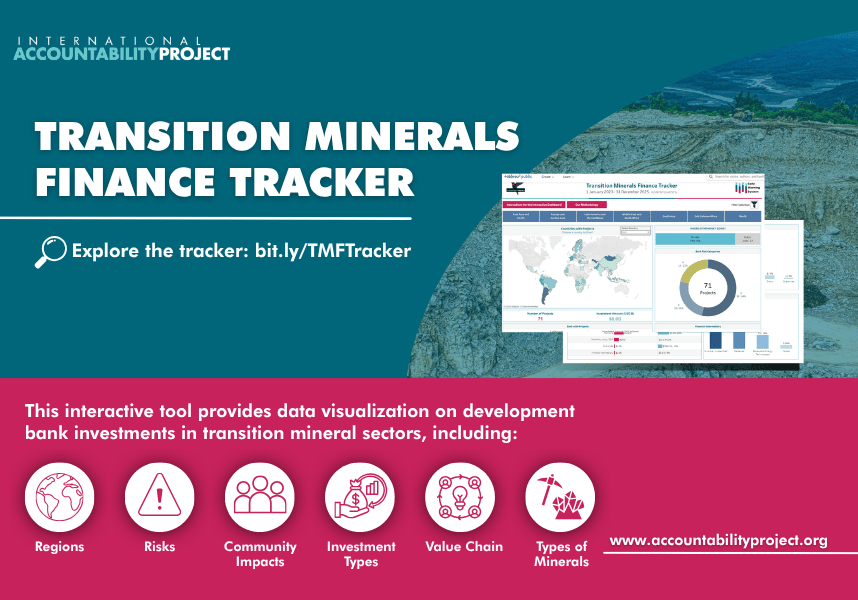
Transition Minerals Finance Tracker
The Transition Minerals Finance Tracker follows the flow of development bank financing behind transition mineral projects to reveal who benefits, who bears the risks, and how investments are shaping the global transition mineral supply chain. This interactive tool visualizes investments made between 2023 and 2025, allowing users to explore projects by region, risk category, community impact, investment type, value chain position, and mineral type. By making this data accessible, the tracker supports greater transparency, accountability, and community-centered approaches to the energy transition.
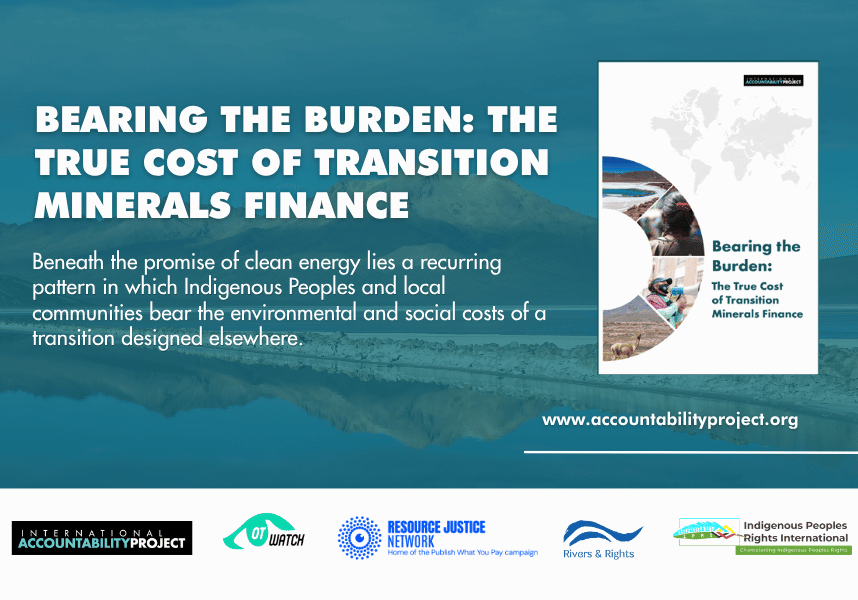
Report: Bearing the Burden: The True Cost of Transition Minerals Finance
As demand for transition minerals grows, development banks are increasing investments across the mineral supply chain. But who benefits from this financing, and who bears its social and environmental costs? This report analyzes 71 development bank-backed projects approved between 2023 and 2025, representing approximately US$8 billion in investment. By combining data, policy analysis, and community experiences, this report serves as tool to support the advocacy for a just and community-led energy transition.